
11 Best Home Gym Essentials for Women

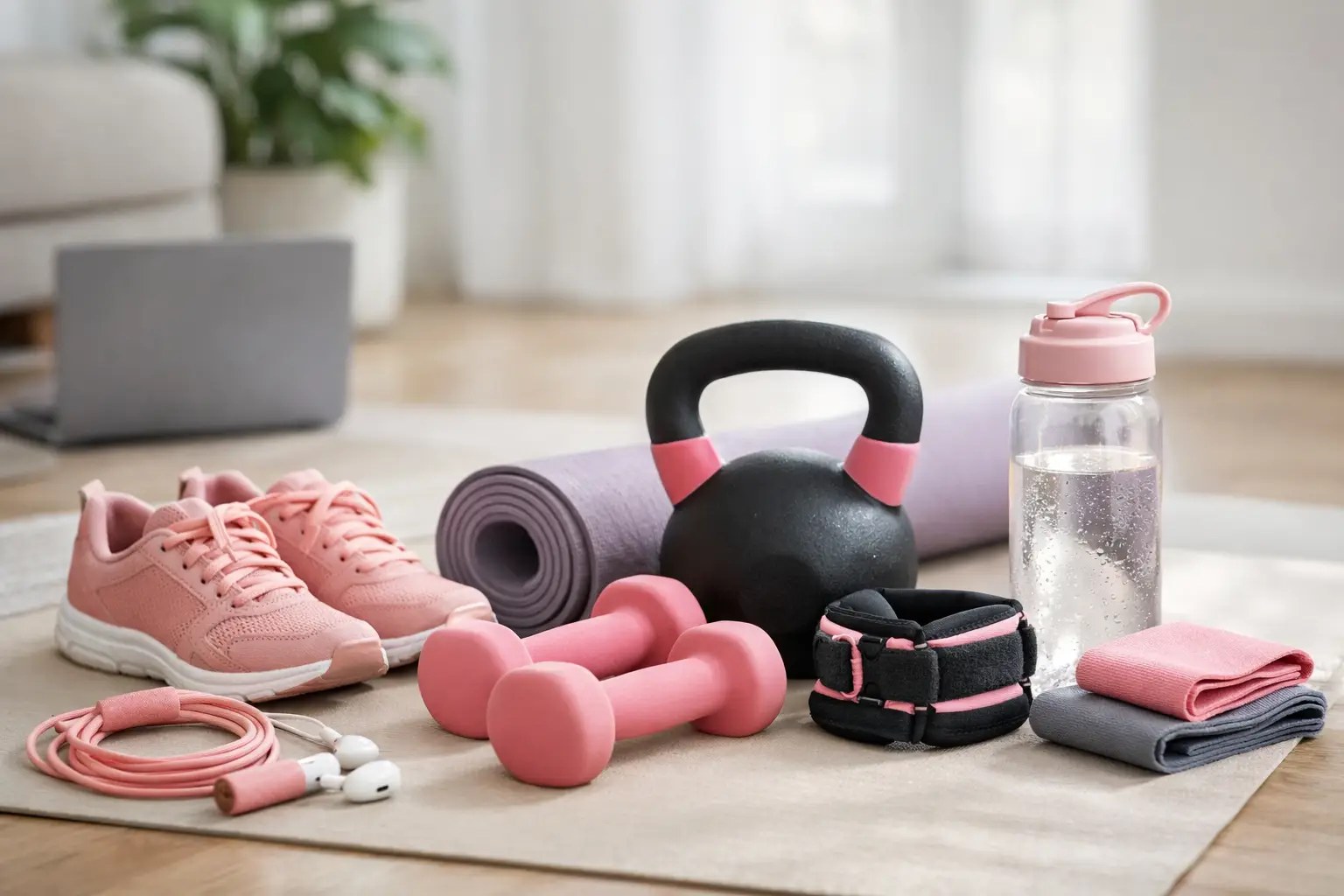
A home workout usually falls apart for one simple reason – the setup makes consistency harder than it should be. If you have to improvise every session, clear space for 10 minutes, or realize halfway through that you do not have the right resistance, motivation drops fast. The best home gym essentials solve that problem by making your routine easier to start, easier to stick with, and easier to adapt as your goals change.
For most women, the right home gym is not a garage full of machines. It is a focused, flexible setup that supports strength, cardio, mobility, and recovery without taking over your living room. Whether you are building muscle, easing back into fitness, training through a busy season of life, or looking for a routine that works better than a packed gym schedule, the smartest approach is to buy for function first.
What makes the best home gym essentials worth buying?
The most useful pieces do at least one of three things well. They help you train multiple muscle groups, they fit easily into your space, and they continue to challenge you after the first few weeks. That last point matters. Plenty of low-cost equipment feels like a good deal until your strength improves and it no longer pushes you.
This is where trade-offs matter. Compact equipment is great for apartments, but not every space-saving option gives you enough load for progressive strength training. On the other hand, larger equipment can be effective, but it only makes sense if you will use it often enough to justify the footprint and price. The goal is not to own more. It is to own the pieces that keep showing up in your routine.
Best home gym essentials to build around
Adjustable dumbbells
If you buy one strength-training staple, make it dumbbells. They are versatile, effective, and beginner-friendly while still being useful for advanced workouts. You can use them for squats, lunges, presses, rows, deadlifts, carries, and core work, which means one category of equipment can cover most of your weekly plan.
Adjustable dumbbells are often the strongest value for home training because they replace multiple sets in one compact footprint. They are especially practical if you want to progress gradually without turning a corner of your bedroom into a storage rack. The trade-off is speed. Fixed dumbbells can feel smoother in fast-paced circuits, while adjustable sets save more space and money over time.
Resistance bands
Resistance bands deserve a permanent place in almost every home gym. They work well for glute activation, upper-body training, mobility work, assisted pull movements, and low-impact strength sessions. They are also one of the easiest tools to pack, store, and use in a small room.
Bands are especially helpful if you are returning to exercise, training around joint sensitivity, or adding intensity without loading heavy weights. They do not fully replace dumbbells for every goal, but they fill important gaps. Mini bands, loop bands, and tube-style bands each serve slightly different needs, so the best choice depends on how you train.
A supportive workout mat
A good mat changes how a home workout feels. It gives you grip for floor work, comfort for stretching, and a cleaner dedicated training area. For yoga, Pilates, bodyweight strength, and mobility sessions, that layer of support makes a real difference.
Thickness matters here. A mat that is too thin can feel uncomfortable for kneeling or core work. A mat that is too soft can feel unstable for standing strength exercises. If your workouts are mixed, choose a mat with enough cushion for floor work but enough firmness for balance and control.
A bench or sturdy step platform
This is one of the most overlooked upgrades in a home setup. A bench expands your exercise options immediately. You can use it for presses, hip thrusts, split squats, step-ups, triceps work, and elevated core exercises. It helps create better angles for training and can make simple dumbbell workouts much more effective.
If space is tight, a compact bench or step platform may be the better fit. The right pick depends on your training style. A flat bench is ideal for strength sessions. A step platform works better if you like cardio intervals and lower-body circuits.
Kettlebell
A kettlebell is one of the best home gym essentials for women who want efficient, full-body workouts. It is excellent for swings, goblet squats, deadlifts, carries, and rotational core work. Because the load is offset, kettlebell training also challenges stability and control in a way that feels different from dumbbells.
If you prefer shorter workouts with a strong conditioning effect, a kettlebell can do a lot with very little equipment. The main consideration is form. Some kettlebell movements are technical, so if you are new to them, start with foundational exercises before moving into faster or more dynamic patterns.
Cardio equipment you will actually use
Not every home gym needs a treadmill, bike, or rower. The best cardio tool is the one that fits your body, budget, and habits. For some women, that is a walking pad that slides under a desk. For others, it is an indoor bike for low-impact endurance training or a jump rope for quick conditioning.
This is where honesty helps. Buying a large cardio machine because it looks motivating is different from buying one that matches the way you like to move. If you hate running, a treadmill will not fix that. If you want low-impact options that are easy on the knees, a bike or elliptical-style setup may be a better investment.
A stability ball or core trainer
Core training at home often gets reduced to crunches on the floor, but the right tool can make it more useful and more engaging. A stability ball supports core work, mobility, posture exercises, and even some dumbbell movements. It can also help with pregnancy-friendly or lower-impact modifications, depending on your stage of life and training needs.
It is not essential for every woman, but it is a strong add-on if your goals include balance, coordination, and deep core strength. If floor space is limited, this category is easier to skip than dumbbells or bands.
Recovery tools
A home gym that supports recovery is more effective than one built only around hard sessions. Foam rollers, massage balls, stretching straps, and percussion tools can help reduce stiffness and make movement feel better day to day. They are not magic fixes, but they can support consistency by helping your body feel more ready for the next workout.
Recovery tools are especially worth considering if you sit for long hours, train frequently, or deal with recurring tightness in the hips, calves, upper back, or shoulders. In a wellness-first setup, these pieces are not extras. They help protect the routine you are trying to build.
How to choose the best home gym essentials for your goals
The best setup depends on what you want your workouts to do. If your priority is strength, start with adjustable dumbbells, a bench, bands, and a mat. If your focus is low-impact fitness and consistency, a walking pad, bands, mat, and recovery tools may be more useful than heavier equipment. If you want efficient full-body training in short sessions, dumbbells and a kettlebell can carry most of the load.
Life stage matters too. A woman training for performance, a beginner building confidence, and someone looking for sustainable movement in midlife may all need different essentials. Joint comfort, available time, storage space, and budget should shape the decision just as much as aesthetics or trends.
What to skip when building your home gym
The easiest mistake is buying too much too soon. A home gym does not become better because it looks complete. It becomes better when every piece has a clear role in your weekly routine. Oversized machines, novelty tools, and duplicate equipment often create clutter more than progress.
It is also smart to be careful with ultra-cheap equipment that wears down quickly, slides on the floor, or feels unstable under load. Saving money upfront can cost more if you end up replacing the item or avoiding it because it does not feel safe. Trusted brands and well-reviewed basics usually make more sense than chasing the lowest price.
If you are building your setup through a wellness-focused destination like WomensWellLife, the real advantage is convenience. You can think beyond equipment alone and create a routine that also supports your footwear, recovery, hydration, and everyday performance.
A simple way to build your setup over time
If you are starting from scratch, begin with four pieces: a mat, resistance bands, adjustable dumbbells, and one recovery tool. That gives you enough for strength, mobility, core work, and post-workout care without overcommitting. From there, add a bench, kettlebell, or cardio option based on what you use most and what feels like the missing link.
The best home gym is not the one with the most equipment. It is the one that fits your life closely enough that working out feels realistic on your busiest week, not just your most motivated one. Build for that version of your routine, and you will create a space that supports strength, energy, and confidence long after the novelty wears off.